

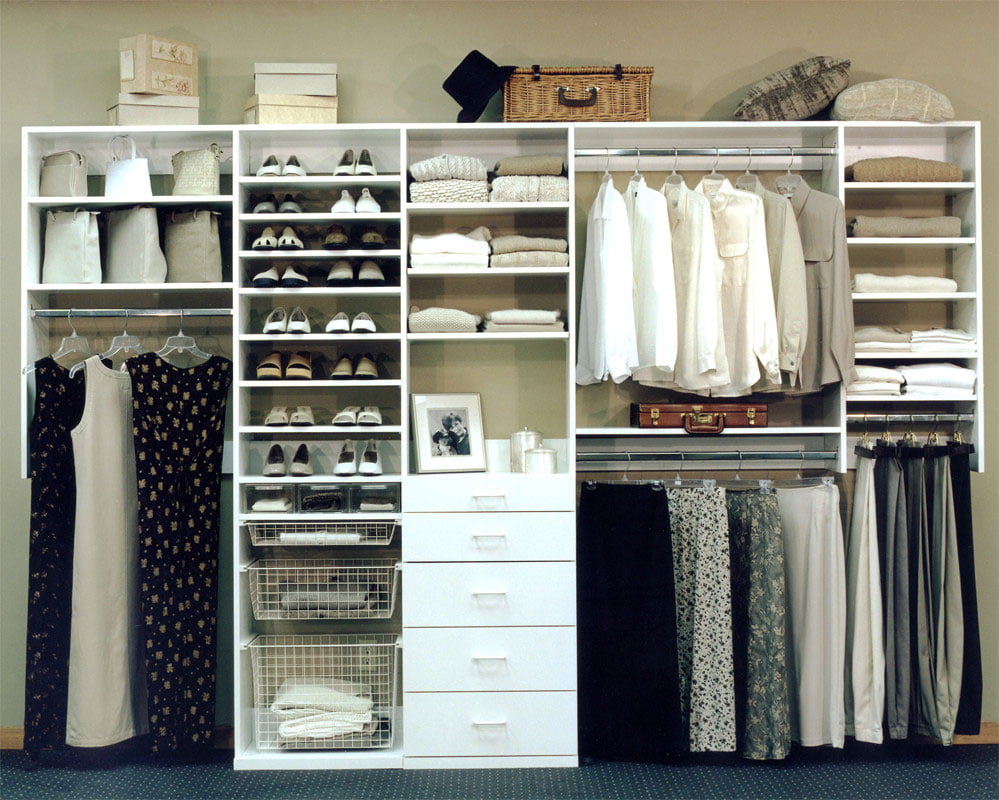
A few months ago, you spent an entire Saturday emptying your closet, folding everything just so, and standing back to admire the kind of order that belongs in a magazine. Now, it looks exactly like it did before you started, with clothes piled where they don’t belong, shoes wherever they landed, and that one drawer you can’t quite close.
If that cycle hits a little too close to home, you’re not alone, and you’re not doing something wrong. Most closets aren’t disorganized because the people who use them lack discipline, but because the space was never actually set up to hold what’s being asked of it. In this guide, we’ll walk you through everything it takes to fix that for good, from your first honest declutter to choosing a storage system built to last, no matter what kind of closet you’re working with.
Along the way, we’ll draw on what we’ve learned helping homeowners across the country design closets that stay organized long after you’ve made the resolution to clean up. When a system is designed around how you actually live rather than a one-size-fits-all template, staying organized stops being a project and starts being automatic. That’s the philosophy behind every custom closet design we build, and it’s the same thinking we’ll apply throughout this guide.
Table of Contents
- Before You Start: Set Yourself Up for Success
- How to Organize Every Type of Closet
- Choosing the Right Closet Organization System
- Closet Organization by Lifestyle
- How to Keep Your Closet Organized Long-Term
- Closet Designs Worth Knowing
- Frequently Asked Questions About Closet Organization
Before You Start: Set Yourself Up for Success
Step 1: Pull Everything Out
It’s tempting to skip this step. Pulling every last item out of your closet feels like it will make the mess worse before it gets better, and for an hour or two, it will. But you cannot design a system around a space you can’t actually see. Shelves, rods, and floor space that are already full of stuff hide their own potential, and you have no real sense of what you’re working with until it’s empty.
If the idea of a full empty-out feels overwhelming, that resistance is normal. The fix isn’t willpower but scope. Tackle one closet at a time, and block off a specific window, even if it’s just two focused hours on a Saturday morning. Once everything is out, most homeowners are surprised by how much they actually own and how much usable space was buried underneath it.
Step 2: Sort Before You Store
With everything out in the open, sort each item into one of four piles: keep, donate, toss, or relocate. This is the step that actually creates order. Putting things back without sorting first just rebuilds the same problem with cleaner folding.
Making honest keep-or-toss calls is easier with a couple of simple rules. If you haven’t worn something in the last year, it’s a strong candidate to go, seasonal items aside. And for anything you’re on the fence about, a quick condition-and-fit check settles most arguments. If it doesn’t fit well or isn’t in good shape, it’s not earning its spot.
Once you know what you’re keeping, group it by category, like tops, bottoms, shoes, accessories, and so on, before anything goes back into the closet. This is what actually determines the storage you need. Guessing at storage before you know your categories is how closets end up with the wrong mix of rods, shelves, and bins in the first place.
Step 3: Measure and Assess Your Space
Before you buy a single storage product, measure the space itself. You’ll want the floor-to-ceiling height, wall-to-wall width, usable depth, and the arc of your door swing, along with any obstacles that could interfere with shelving or rods, like vents, outlets, sloped ceilings, or awkward angles.
Skipping this step is one of the most common and most expensive closet mistakes. Storage that doesn’t account for real dimensions ends up unused, returned, or wedged in at an angle that defeats the purpose. It’s also exactly why precise measurement is a standard part of every free NewSpace design consultation. Getting the numbers right from the start is what makes a system fit like it was built for the space, because it was.
How to Organize Every Type of Closet
How to Organize a Walk-In Closet
A walk-in closet earns its keep when it’s organized into zones, such as dedicated areas for long hanging items, short hanging items, folded goods, accessories, and bags. Without zones, a walk-in just becomes a larger version of a cluttered reach-in.
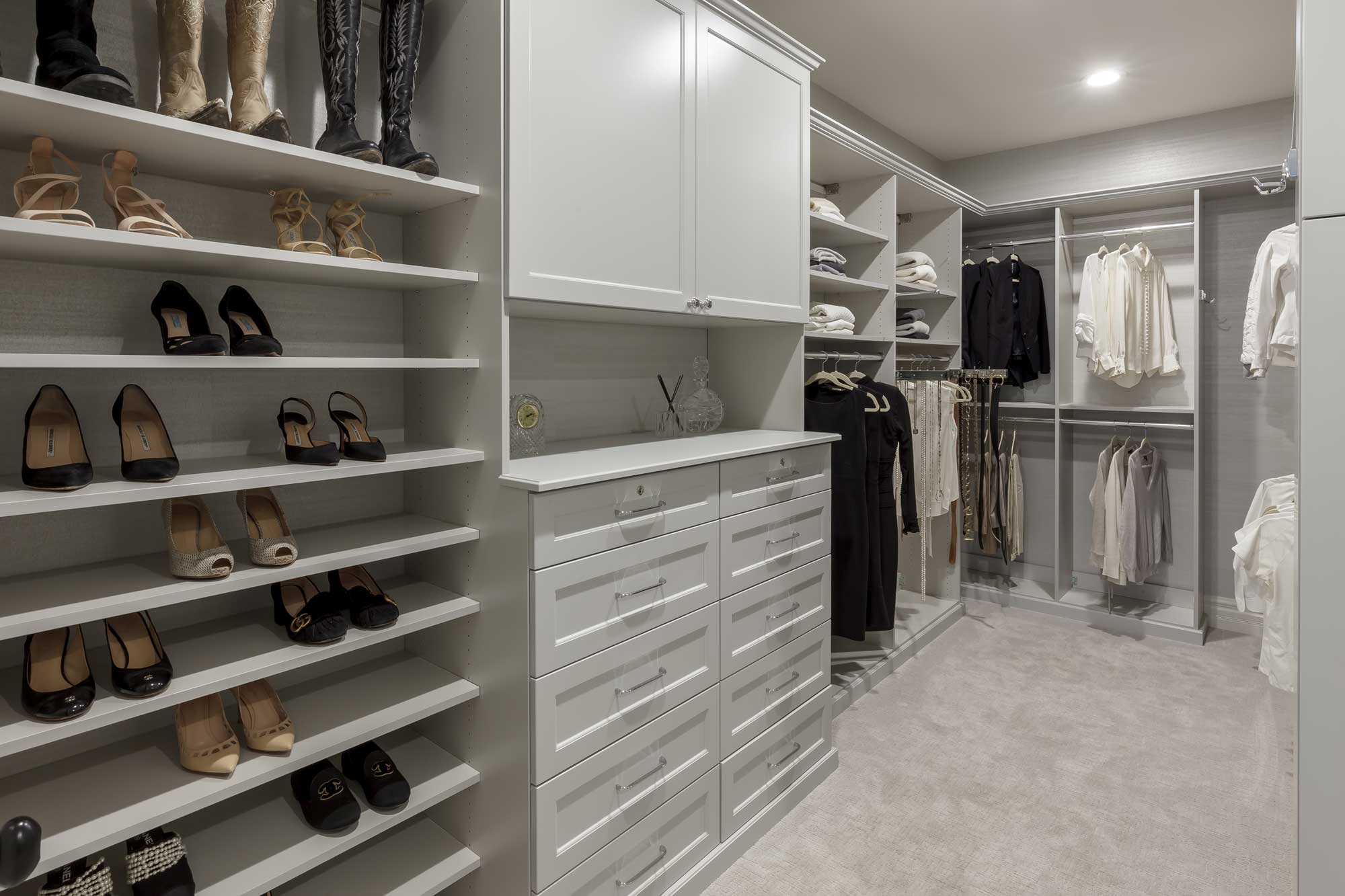
Most walk-ins fall into one of three layout types:
- U-shaped, which wraps storage around three walls and works well for larger rooms
- L-shaped, which uses two adjacent walls and suits mid-sized spaces
- Single-wall is a simpler layout that still delivers strong organization in a smaller footprint
The right configuration depends on your closet’s shape and how much floor space you want to keep open.
If your walk-in is large enough, an island or center bench earns its space quickly, giving you somewhere to fold, stage tomorrow’s outfit, or sit while you put on your shoes. And don’t underestimate lighting. Well-placed lighting makes a closet easier to use and changes how the whole space feels, turning a storage room into something closer to a boutique.
Zoning like this works best when it’s built into the space rather than layered on top of it with freestanding organizers. A custom walk-in closet makes every zone permanent, so the system holds its shape even on the days you’re rushing out the door.
How to Organize a Reach-In Closet
Reach-in closets come with the built-in challenge of limited depth and width, but often plenty of unused height. Double-hang rods are the single best fix for shorter items like shirts, jackets, and folded pants as they will roughly double your hanging capacity without adding an inch of footprint.
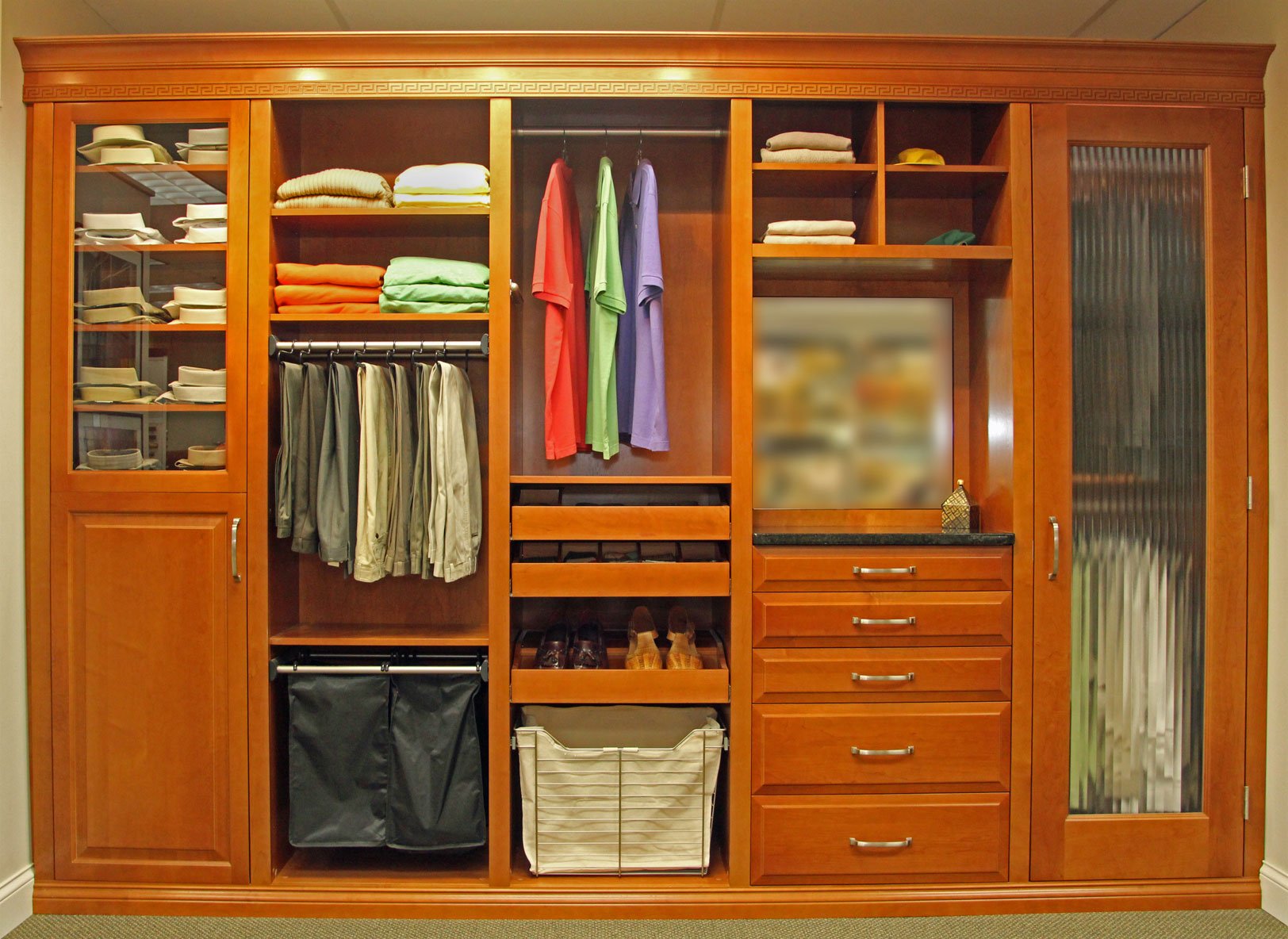
From there, a handful of additions go a long way:
- Shelf risers to stack folded items without crushing them
- Slim velvet hangers to reclaim rod space
- Over-door organizers for accessories
- Pull-out drawers for anything you’d rather not leave on open shelving
The most common reach-in mistake is treating the floor as a storage shelf. Once shoes, bins, and bags start piling up on the ground, the closet stops functioning and starts collecting. Getting items up off the floor, even with something as simple as a shoe rack, makes a reach-in feel dramatically larger.
How to Organize a Small Closet
In a small closet, vertical space is your most underused asset. Most people organize at eye level and ignore everything above and below it, leaving a huge amount of potential storage untapped.
Stack shelving to make use of the full height, add hooks to the walls and the back of the door, and use hanging organizers for shoes and smaller accessories that would otherwise clutter a shelf. None of this works, though, without ruthless editing, because a small closet simply can’t absorb excess the way a larger one can, so the sorting step matters even more here.
A purpose-built system tends to make the biggest difference in small closets specifically, because every inch is engineered for a job rather than left to general-purpose shelving. The same square footage can hold noticeably more when storage is designed for it rather than squeezed into it.
How to Organize a Bedroom Closet
A bedroom closet does double duty: it needs to function well and look intentional, since it’s often visible from the room itself. Coordinating finishes and keeping visible storage tidy makes the closet feel like part of the room’s design rather than an afterthought.
Within the closet, separate everyday items from seasonal or occasional pieces. Keeping only what you reach for regularly at eye level, with off-season items tucked higher or further back, keeps the daily routine simple. A well-organized bedroom closet has an outsized effect on how the entire room feels, as it’s hard to feel calm in a bedroom when the closet door is fighting to stay shut.
How to Organize a Linen Closet
Linen closets live and die by shelf spacing. Towels, sheets, and blankets all need different amounts of vertical room, so shelves set at a single uniform height almost always waste space somewhere.
Rolling towels rather than folding them saves shelf space and makes them easier to grab without disturbing the stack. For sheet sets, bundling each set inside its own pillowcase keeps flat sheets, fitted sheets, and pillowcases together rather than scattered across three separate piles. Bins work well for anything loose, like washcloths, extra pillowcases, and travel-size toiletries.
A simple label system, paired with baskets for loose or miscellaneous items, is often the difference between a linen closet that stays tidy and one that slowly turns into general overflow storage.
Choosing the Right Closet Organization System
Wire Shelving Systems
Wire shelving is the most common closet upgrade thanks to its affordability, wide availability, and ventilation, making it a reasonable fit for linen or utility storage. However, it comes with real limitations: it’s not particularly attractive, it’s difficult to reconfigure once installed, its weight capacity is limited, and folded items tend to slip through the gaps.
Wire shelving tends to work best in secondary spaces, like utility closets, pantries, or storage areas, where function matters more than appearance.
Modular Closet Systems
Modular systems, built from pre-made components assembled on-site, offer more flexibility and a cleaner look than wire shelving. They’re a solid middle-ground upgrade for homeowners who want something better without committing to a full custom build.
The tradeoff is fit and consistency. Fixed module sizes don’t always match a room’s exact dimensions, quality varies widely among manufacturers, and the finished result can look assembled rather than designed. Modular systems tend to suit renters or homeowners testing the waters before making a bigger investment.
Custom Built-In Closet Systems
The defining feature of a custom system is exactly what the name suggests: it’s designed and built for one specific space and one specific homeowner, not a catalog of standard sizes. That means every dimension, including corners, angled ceilings, and awkward pockets of space, gets put to work. Material quality, finish options, and adjustability are all part of the design conversation from the start, which is the foundation of every custom closet system we design.
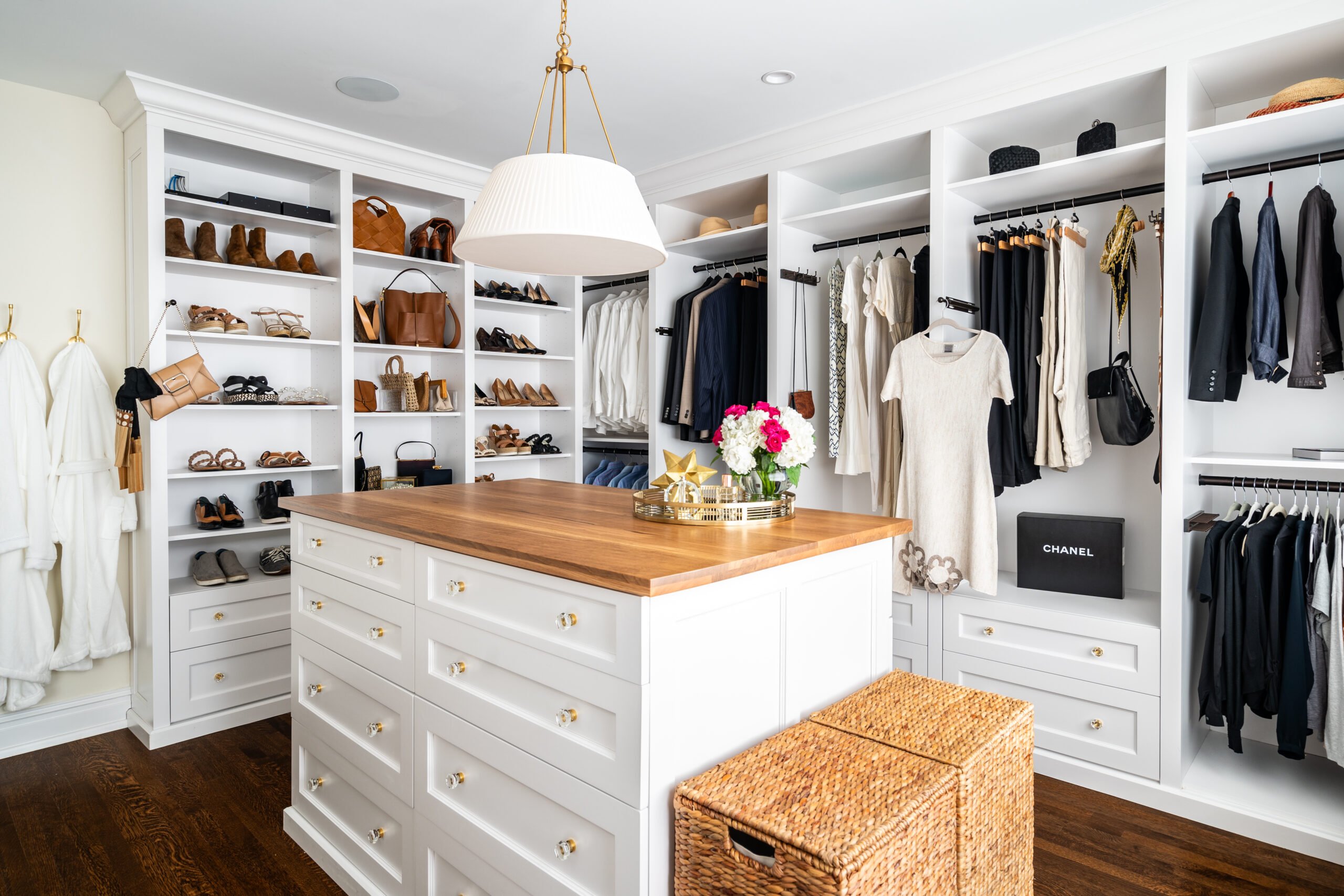
The long-term value tends to be the deciding factor for most homeowners. Built-ins are made to last for decades, they contribute to a home’s resale value, and they eliminate the slow, ongoing cost of replacing inadequate storage every few years. Rather than starting from a template, we build each system around a homeowner’s wardrobe, daily habits, and personal style, which is the same approach you’ll find across our broader home organization work.
Closet Organization by Lifestyle
For Families With Kids
Kids’ closets work best when kids can actually use them. Low-hanging rods, pull-out bins, and clearly labeled sections put everyday items within reach and make it realistic for kids to help put things away themselves.

Because kids grow quickly, adjustable systems are worth prioritizing, such as adding a rod or shelves that can be raised over time. This will save you from having to redo your entire closet every couple of years. Additionally, sort and categorize everything in a way that works easiest for you and your child, such as school clothes, play clothes, and off-season items. Durable, easy-to-clean materials and simple category logic keep the whole system easy to maintain.
For Fashion Enthusiasts
For anyone with a substantial wardrobe, closet organization becomes closet design. Dedicated shoe display walls, handbag shelving, and accessory drawers keep a large collection visible and accessible instead of stacked in boxes.
A few features make an outsized difference here: full-length mirrors for a real read on any outfit, pull-out valet rods for staging tomorrow’s look, and backlit display areas that treat favorite pieces like the investments they are. Done well, a closet like this stores your wardrobe and makes getting ready for the day something to look forward to.
For Minimalists
A minimalist closet starts with fewer things, not more storage. Editing the wardrobe down is the real first step, because no system fixes a closet that’s holding onto three times as much as it needs.
From there, clean-line systems with concealed storage, monochromatic finishes, and uncluttered surfaces support the aesthetic without undoing the effort. A well-designed custom system reinforces minimalism rather than working against it, since there’s simply no excess storage to invite further accumulation.
For Small Spaces and Apartments
In a small space or apartment, every vertical inch and every flat surface, including the backs of doors, is a storage opportunity worth using. Multi-use furniture with built-in storage can also serve as a dedicated closet in bedrooms that don’t have one.
Even a modest reach-in can function like a much larger closet once it’s organized around a real system instead of general-purpose hooks and hangers. Smart design does more for a small space than square footage ever could.
How to Keep Your Closet Organized Long-Term
The One In, One Out Rule
Of all the habits that keep a closet organized over time, this is the single most effective: for every new item that comes in, a comparable item goes out, even before the new piece gets put away.
The rule works because it stops accumulation at the source, rather than trying to correct for it later during a big seasonal purge. It takes about ten seconds and prevents the slow creep that turns an organized closet back into a cluttered one.
Seasonal Closet Audits
Plan on a full closet review twice a year, in spring and fall, when the seasons naturally align with how most wardrobes rotate anyway. Use the audit to spot what hasn’t been worn, what needs repair, and what’s simply been outgrown.
A well-designed custom system makes this easier by incorporating dedicated zones for off-season storage, so the closet you use every day stays focused on what’s actually in rotation rather than getting crowded by items that only come out twice a year.
Everything Needs a Home
At its core, clutter is just a collection of items without an assigned place. Anything without a home ends up on a counter, chair, or the closet floor, because it has nowhere else to land.
A custom storage system solves this at the structural level, because every category of item gets a purpose-built spot designed for it. The real reason custom closets stay organized long after the initial setup is that the system does the work, rather than relying on willpower to maintain them.
Closet Designs Worth Knowing
The Dressing Room Aesthetic
More homeowners are asking for closets that feel less like storage rooms and more like boutiques. Islands, upholstered seating, full-length mirrors, and curated display areas are the defining pieces of this look, and it’s achievable across a range of budgets when the design approach is right.
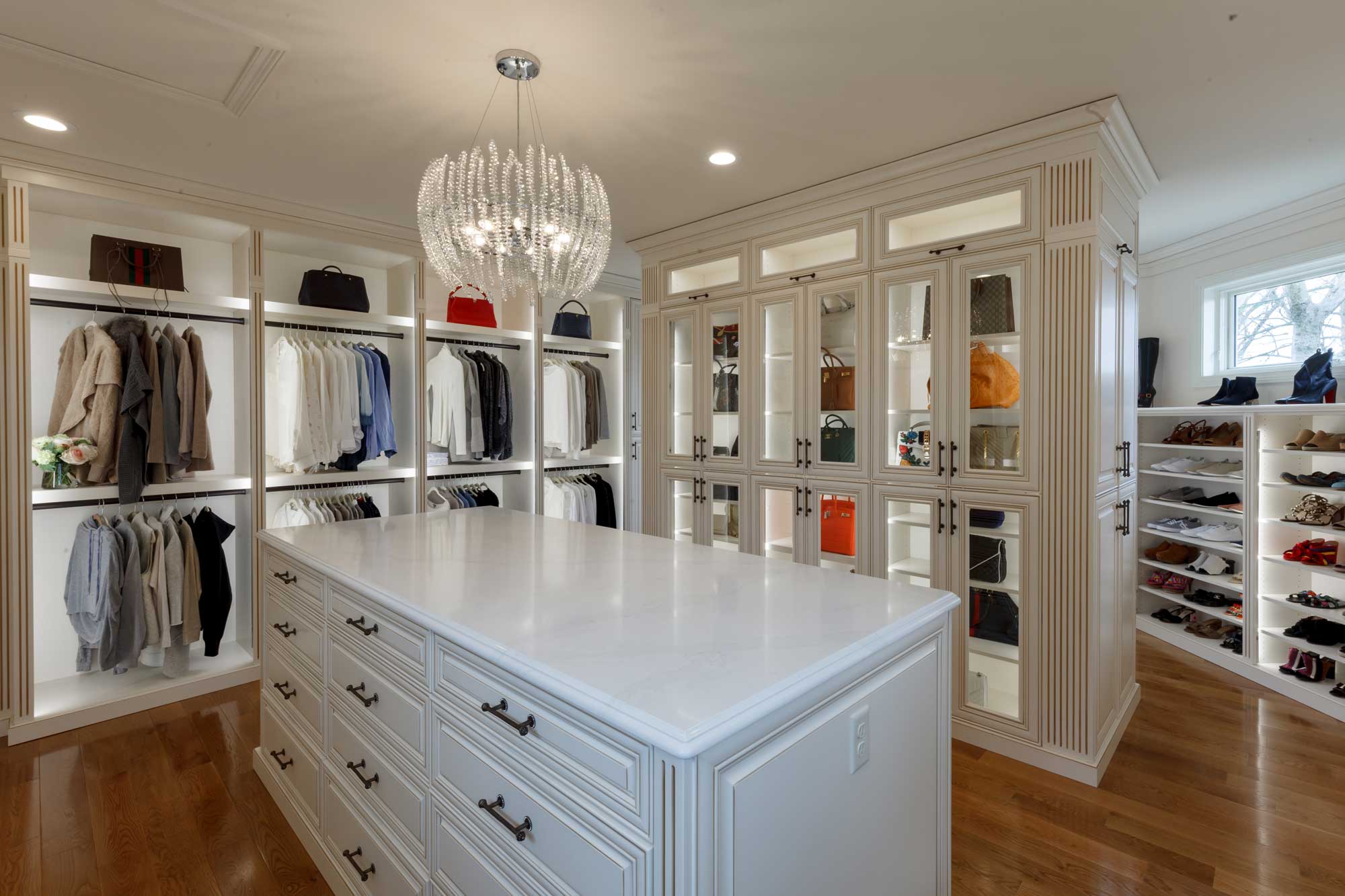
Integrated LED Lighting
Lighting has become one of the highest-impact upgrades in closet design. Strip lighting along shelves, motion-activated fixtures, and backlit displays all change how a closet functions, not just how it looks. Being able to actually see what you own reduces duplicate purchases and makes getting dressed noticeably less stressful.
Mixed Open and Closed Storage
Pairing glass-front cabinets, open display shelving, and closed drawers within a single system is one of the more practical trends in closet design right now. It creates visual interest for the pieces worth showing off, while keeping everything else neatly out of sight.
Sustainable and Natural Materials
Natural wood finishes, warm tones, and non-synthetic materials continue to grow in popularity for closet design. Beyond the look, these materials tend to age gracefully over time, adding character to a space rather than showing wear the way some synthetic finishes do.
Frequently Asked Questions About Closet Organization
What is the best way to organize a closet?
The best approach is to fully empty the closet, sort every item into keep, donate, toss, or relocate, and then measure the space before buying any storage. Organizing around real categories and real dimensions rather than guessing is what makes a system last.
How do I organize a small closet with a lot of clothes?
Start by editing your wardrobe down; a small closet can’t absorb excess, no matter how it’s organized. From there, maximize vertical space with stacked shelving, double-hang rods, and door or wall hooks to multiply your usable storage without adding square footage.
What should I keep in my closet vs. store elsewhere?
Keep items you wear regularly within easy reach, and move seasonal, sentimental, or rarely used pieces to secondary storage like a linen closet, attic, or under-bed bins. This keeps your main closet focused on your everyday wardrobe.
How long does it take to organize a closet?
A single reach-in or small closet typically takes two to four hours for the sorting phase alone. Larger walk-in closets, or closets receiving a full custom system, take longer overall once design, measurement, and installation are factored in.
Are custom closets worth the investment?
For most homeowners, yes. Custom systems are built to fit the exact space, last for decades, and add resale value, which offsets the higher upfront cost compared to wire or modular shelving. They also tend to eliminate the recurring expense of replacing storage that doesn’t quite work.
What closet features add the most value to a home?
Custom built-in shelving, ample lighting, and well-designed walk-in layouts consistently rank among the closet features that resonate most with future buyers. These upgrades signal thoughtful, quality construction throughout the rest of the home.
How do I stop my closet from getting messy again?
Adopt the one-in, one-out rule, schedule seasonal audits twice a year, and make sure every category of items has a dedicated home. Closets that stay organized long-term almost always have a system behind them, not just good intentions.
Ready to Build a Closet That Stays Organized?
Every tip in this guide will help, but tips only go so far when the storage itself isn’t built to support them. The closets that stay organized aren’t the ones with the most willpower behind them, but the ones designed around how the people using them actually live.
If you’re ready to stop reorganizing the same closet every few months, we’d love to help. Schedule a free design consultation with the NewSpace team, and let’s talk through what a closet built specifically for you could look like.
NewSpace design fully custom closet systems are available for homeowners nationwide. We’re experienced with walk-ins, reach-ins, bedroom closets, and everything in between. If you’re serious about getting organized for good, a custom closet design is the next natural step.