
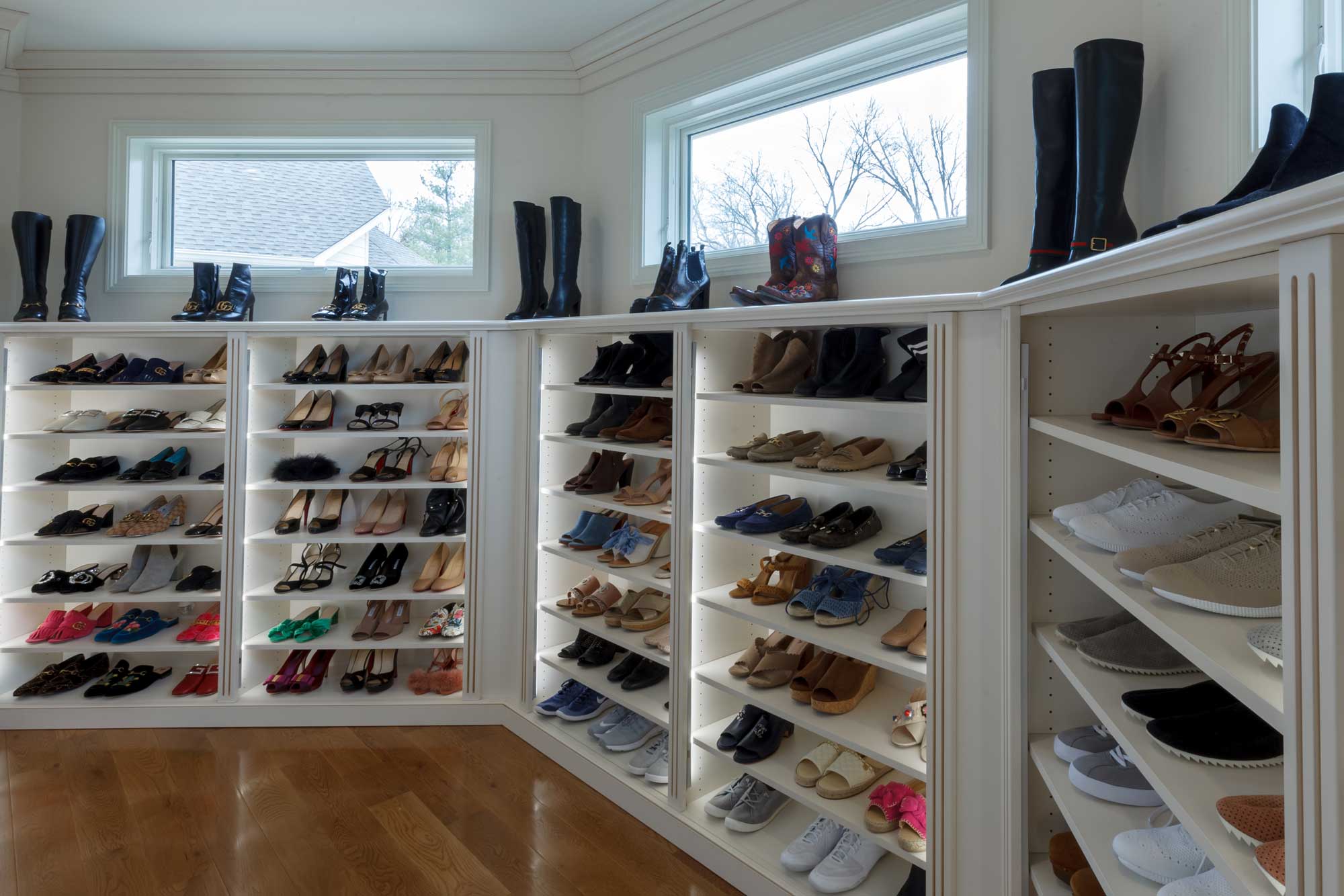
 The most effective shoe storage is built right into your closet. Custom closet shoe shelves, drawers, and cubbies, sized to your actual collection, keep every pair off the floor, organized, and easy to find. Instead of piles by the door or a wobbly shoe rack in the corner, a custom system turns wasted closet space into a place for every pair to belong. In this blog, we’ll walk through the shoe storage solutions our designers use most, from open and slanted shelves to cubbies, pull-out drawers, mudroom benches, and smart fixes for small spaces.
Why Custom Shoe Storage Beats Store-Bought Racks
A store-bought shoe rack or over-the-door shoe organizer is designed for an average closet and an average shoe, which means it rarely fits yours. Fixed widths leave awkward gaps or crowd out floor space. Fixed shelf heights mean tall boots don’t fit, while flats and sandals waste several inches of air above them. And because most of these units are built from thin metal, fabric, or particleboard, shelves sag and pockets stretch long before the shoes inside wear out.
Custom shoe storage starts from the opposite direction. Instead of fitting your shoes to a product, a designer fits storage to your shoes, your closet’s dimensions, and how you get ready in the morning. The result is functional shoe storage that holds exactly what you own and nothing it doesn’t. That might mean a wall of slanted shelves in a walk-in, a narrow pull-out tower in a reach-in, or a bench by the back door. Our approach to custom closet design treats shoe storage as part of the whole closet plan, not an afterthought. Here’s what that can look like in practice.
Start by Taking Inventory of Your Shoe Collection
Before choosing shelves, drawers, or cubbies, it helps to know exactly what you’re storing. Pull every pair out of the closet, from under the bed, and from the pile by the door, then sort them into a few groups:
- Everyday shoes: The sneakers, flats, and loafers you wear several times a week
- Athletic shoes: Running, gym, and sport-specific pairs, which often need airflow after use
- Work and formal shoes: Dress shoes, heels, and leather pairs that benefit from protection from dust and light
- Seasonal shoes: Winter boots, rain boots, sandals, and flip-flops that only need prime real estate part of the year
- Special-occasion and collectible pairs: Shoes you want to protect or display rather than just store
Count how many pairs land in each group, and measure your tallest boots and your longest shoes. If the closet is shared, note how many pairs belong to each person. This is also the moment to let go of anything that doesn’t fit, hurts to wear, or hasn’t left the closet in a year.
Your inventory points you toward the right storage style. A collection that’s mostly everyday sneakers calls for open shelves you can grab from quickly, while a large group of leather dress shoes is better protected behind drawers or doors. A boot-heavy collection needs taller sections, and a sneaker collection you’re proud of may deserve display cubbies. When you work with NewSpace, your designer does this assessment with you during an in-home visit, measuring the space and reviewing your collection before drawing a single shelf. You can schedule a free design consultation to get started.
Keep Your Go-To Shoes Within Reach Using Open Shelving
Open shelving is the workhorse of closet shoe storage and its most versatile solution. With nothing to open or pull, you can see your options at a glance and grab the right pair on your way out the door. It’s also one of the most space-efficient choices, which makes it a natural fit for reach-in closets where every inch counts.
The key is adjustable shelves. In a custom system, shelves sit on a grid of pin holes, so you can raise or lower them in minutes. As rough guidelines, flats and sandals need about 4 to 5 inches of clearance; most sneakers and loafers need 6 to 7 inches; heels need 7 to 9 inches depending on height; and ankle boots need 9 inches or more. Setting each shelf to the height of the shoes it holds lets you fit noticeably more shelves in the same section than a rack with fixed spacing allows. When the seasons change and boots come out, you simply move a shelf to make room.
A few placement tips make open shelving work even harder. Keep daily pairs between waist and eye level so they’re the easiest to see and reach. Put heavier shoes and boots on lower shelves. If your shelves are shallow, store pairs heel-to-toe, with one shoe facing forward and one facing back, to fit multiple pairs per row while still seeing both.
Get a Better View with Slanted Closet Shoe Shelves
Tilted forward at a gentle angle, with a low rail along the front edge to keep each pair in place, slanted closet shoe shelves show you the entire shoe instead of just the toe. You can spot the pair you want in seconds, even on the top shelf, and stacking several in a column turns an otherwise unused stretch of wall into a display that maximizes your vertical space.
This style is a favorite in walk-in closets and for larger collections, where flat shelves can start to feel like a jumble. It works beautifully for heels, dress shoes, loafers, and sneakers. Tall boots are better suited to a flat shelf or a dedicated boot section, and lightweight slides may need a slightly taller front rail to stay put.
Add integrated LED lighting so every pair stays visible, even in the back corners of the closet. With a few flat shelves above for boxes and bags, an angled shoe wall can hold dozens of pairs without feeling crowded.
Give Every Pair of Shoes Its Own Cubby to Call Home
Cubbies divide a section of shelving into individual compartments, with one pair per slot. Because each pair has defined walls on both sides, shoes don’t topple over, slide into each other, or end up stacked in a pile. Cubbies also make it obvious when something is missing, which helps keep the closet tidy.
They’re popular for sneakers and collectible pairs that people want to show off, as well as for children’s shoes, since even young kids can learn that every pair goes back in its own spot. Cubbies can be left open for easy access or fronted with glass-door inserts to display shoes while keeping dust out. Clear storage boxes on top shelves offer a similar look-but-protect approach for pairs you wear less often.
Like any shelving in a custom system, cubbies can be sized to your shoes rather than to a standard grid, with taller compartments for high-tops and shorter ones for flats. Explore cubbies, glass inserts, lighting, and other closet accessories you can build into your design.
Pull-Out Drawers for a Clean, Dust-Free Look
If you prefer a tidy, closed-door look, drawers and pull-out shelves are the answer. Enclosed, hidden storage removes visual clutter and protects shoes from the dust and light that slowly dull them over time, which is particularly helpful for natural materials like leather.
That makes drawers ideal for formal shoes, special-occasion pairs, and off-season shoes that sit for weeks at a time. Shallow drawers with dividers keep each pair separate, while full-extension pull-out shelves let you see everything at once without exposing shoes. Just make sure shoes are completely dry before putting them in any enclosed space.
This is also where style really comes through. Drawer fronts, finishes, and hardware are what you’ll see every day, so choose from warm wood tones like walnut or rustic brown, crisp painted finishes, or textured surfaces, along with hardware that suits the rest of your home.
Mudroom and Entryway Storage for the Shoes You Grab and Go
The shoes your family actually wears every day rarely make it back to the bedroom closet. They end up piled in the hallway, kicked off by the entrance, or scattered across the floor of the storage area by the garage. Instead of fighting that habit, good entryway storage gives shoes a landing spot right where they come off.
A built-in storage bench anchors most mudroom designs. Set up as a dedicated shoe bench, it gives everyone a sturdy place to sit while pulling on boots, with shoe cubbies or shelves underneath and an optional top cushion. Above it, hooks work as a coat rack for jackets and backpacks, and a small shelf or drawer gives keys, sunglasses, and dog leashes a consistent spot. For busier households, individual lockers give each family member their own section, which keeps kids’ sneakers from migrating across the room.
Durable materials matter here. A lower shelf or tray for wet and muddy boots helps protect the cabinetry during St. Louis winters, while open or ventilated cubbies let shoes air out after a rainy day. If you’re working with a small entry or narrow hallway, a slim shoe cabinet, wall-mounted shelf, or compact bench can still keep the floor clear.
Making Room for Seasonal and Off-Season Shoes
One of the simplest ways to free up closet space is to stop trying to store shoes for every season in the same prime spot. Snow boots don’t need to be at eye level in July, and sandals don’t need a front-row shelf in January. Rotating shoes twice a year keeps your daily closet focused on what you’re actually wearing.
The best place for off-season pairs is a dedicated zone, whether that’s the upper shelves of your main closet or a separate space like one of our custom utility closets. Before putting shoes away for the season, clean them, let them dry completely, and stuff them with acid-free tissue or use shoe trees to help them hold their shape. Store them in breathable bags or boxes rather than sealed plastic, which can trap moisture.
Location matters as much as packaging. Damp basements, hot attics, and spots near radiators or furnace pipes can crack or mildew leather, so a climate-controlled closet is a much safer choice. Label containers clearly or use clear bins so you can find the right pair when the weather turns.
Shoe Storage Solutions for Small Closets
A small closet doesn’t have to mean shoes on the floor. It just means making the most of the space you have. The biggest opportunity is usually vertical, as most closets have unused storage space above the top shelf and below the shortest hanging clothes. A custom system can claim both.
A few strategies that work well in tight footprints include:
- Building to the ceiling: Extending shelving all the way up gives you a home for off-season shoes and boxes that don’t need daily access.
- Adding a narrow shoe tower: A slim column of adjustable shelves at the end of a hanging section can hold many pairs in very little width.
- Pairing short hanging with shoes below: Under shirts and jackets, shelves or slanted racks can turn dead space into shoe storage.
- Using the door: A sturdy, properly mounted door rack holds flats, sandals, and slippers far better than a fabric organizer that sags.
- Choosing pull-outs: A pull-out shelf or rack makes deep corners usable instead of a place where shoes disappear.
This is where professional design pays off most. Small closets leave little room for error, and an experienced closet designer knows how to fit more storage into an awkward footprint than a shoe rack ever could. For inspiration, browse real projects we’ve done in our closet gallery.
Matching Your Shoe Storage to Your Home’s Style
Shoe storage should feel like part of your closet and your home, not a separate piece of furniture dropped in later. That means the finishes, hardware, and layout of your shoe shelves should match the rest of the space and your décor, whether your style leans modern with flat-panel fronts and slim pulls, traditional with raised-panel faces, or somewhere in between.
Little details pull the look together, like consistent shelf edges, lighting that highlights your shoe wall, drawer fronts that match nearby cabinets, and a layout that puts shoes where they make sense in your daily routine. When every element is designed together, even a large shoe collection looks neat and intentional, not cluttered.
That’s the advantage of working with a St. Louis custom closet company rather than ordering from a catalog. Every NewSpace system is designed around your space, your collection, and your style, then built and installed to fit. Meet our closet designers and see how they approach each project.
Ready to get your shoes organized? Call (314)423-3200 or schedule a free design consultation with a NewSpace closet designer.


